Showing posts with label Specialized Catalogs. Show all posts

Thursday, July 14, 2016

Vacation time..and two new acquisitions to the specialized catalogue library for Poland and Ethiopia

I had hoped to publish at least one more catalogue review this month, but alas real life work interveneed.  And tomorrow I leave for a 2-week vacation out of town, so there will be no updates until probably the first week of August.

In the meantime, I just received today a copy of volume 1 of the Fischer Katalog Polskich Znakow Pocztowych recently released in Poland, covering the main stamp issues of the Interwar Era, the Socialist Republic period and the modern Polish state.  Will hope to get volume 2 soon, which covers regionals such at Danzig and the German Plebiscites, the General Gouvernment issues from the Nazi Occupation, and other related material.


The new edition of Fischer's Poland Specialized Catalogue, volume 1.

I am also waiting for delivery from Italy the four-volume specialized catalogue of Ethiopian stamps and postal history up to 1974 published by Vaccari. They were on sale at Vaccari direct for about Euro 80, which for a four volume set is very cheap.  Two volumes deal with the stamps, with the second volume dealing with Postal History post-Italian occupation, while a third volume covers the classical postal history from the mid-19th century to 1936, and a fourth volume of addendum and furhter notes and updates.


The two main volumes of Vaccari's Ethiopia Specialized Catalogue

So lots of material in the pipeline coming for later this summer here on my blog. Stay tuned!


Sunday, April 3, 2016

How I learned to love Lighthouse Vario Stockpages (tutorial on how I make my own stamp albums)

It's a question I have seen many times on different stamp collecting fora.

"What Is The Best Stamp Album?"

In the end this is the question that can only be answered by trial and error.  You just have to try different methods of housing your collection, and eventually like Goldilocks you will find the one that is "just right" for what you are collecting and what your plans to collect might entail in the future.

The standard practice in philately has of course to house stamp collections in albums.  For many, the pre-printed albums published by companies as widely varied as Scott, Palo, Minkus, Gibbons, Ka-Be, Lighthouse, Lindner etc. etc. are exactly the right solution. Everything laid out with a spot, all you have to do is fill the spaces and that's all.

But....we all know that there are limitations with pre-printed albums.  Often they do not show spaces for stamps that we may acquire in the course of our collecting lives.  This is moreso with the "representative albums" like a Scott Internations or Minkus Supreme Global where the editors consciously will not include items, usually due to price but sometimes merely on a whim.

(and for those of you who have not checked out the blog  Big Blue 1840-1940 by my fellow blogger Jim aka jkjblue, first SHAME ON YOU! and second check it out, as this is an issue that collectors using the Part 1 of the Scott International Albums face time and time again.)

More specialized albums of course can provide more coverage, but often it will still lack spaces for items listed in specialist catalogs.   Of course you can always insert a blank page for the odd varieties that may not have a space.

OR you could decide to design your own stamp album.   That way you can control what goes into your album and how you want to display it for later viewing.  Nothing new, this idea, most of the great collections have historically been on custom-made or homemade pages exactly because of this.

So you decide to make your own album. If you want you can have it be based on actual pages you create yourself.  Desktop publishing means these days you do not have to have a degree in art to create a well-designed page, and adding artwork no longer requires a huge degree of artistic ability, though if you have it in you, its easy enough to add your own personal touches.

So you need to buy paper (best be acid-free, preferably archival quality), and of course some way to mount the stamps onto the pages. Hinges are one solution, but hinges these days just are not what they used to be, hence why some collectors will scour ebay looking for unopened packs of Dennison hinges from the 1950s.

And then of course there are the plastic stamp mounts,  Clear back or black-back, back slit or top slit, strips you cut or pre-cut sizes, you can pretty much find the exact right size for whatever stamp you are trying to mount. Though if you collect a large area over a long period of its philatelic history, you will likely need to have a bunch of different sizes, and while not as expensive as they were when they first came out in the 1980s, they are still a few US$ per pack.

And of course there is one potential pitfall.  You make a page, get it all done and mounted, then realize you have missed one value in a set.  Back to the drawing board on making a new page.  It may not take as long as it used to doing everything by hand, but still that is more time spent to create a page that has all the correct items on it.

There is an alternative to making your own pages on paper.  Stockbooks and stock pages.  Here all you have to do is decide how you want to lay out the stamps on a page of the stockbook or stockpage and put the stamps in the pocket, and...DONE!  Missed a stamp in a set, not a huge problem just have to rearrange how things are organized a bit to fit it in.  Which is why of the two, I prefer stock pages over stock books.  Pages can be put in a binder, have no fixed limit, and if you need to rearrange a couple pages it most likely will not mean rearranging the whole book.

My Method Of Madness To Organizing My Collection

As those of you who have followed my posts in this blog the last few months know, I love specialized catalogs.  My goal is to have a good specialized catalog for each nation that will be the base of how I collect the stamps of that nation.  Of course no pre-printed album would work for that, and after a couple of tests I finally settled on using Lighthouse Vario stockpages to house my collections.

The most important thing though is to create an organized system to help keep track of what is in the collection and what I need, as well as make sure space is provided for all stamps I may ever hope to acquire during the remainder of my collecting days (knock on wood another half century or so!)  So the first thing I do is plan a layout of the album on excel (actually OpenOffice's freeware equivalent) so that I know where to put a stamp on which page in the album.

First a few things to remember about Vario F pages. They come in an array of pocket height sizes, which means the pockets will vary in height. Pages with 6 pockets per side have pockets 39mm in height, 5 pocket pages are 51 mm in height, and 4 pocket pages are 63mm in height per row.  All Vario F pages have a standard row length of 195mm.

Schematic of a Vario 5S (5 pocket page) showing height of pocket, which varies on the number of rows on a page.  All the Vario pages have pockets 195mm across.

From my album making, I have found 6-row pages work well for most nations up to about 1945, then the increasing number of tall stamps (44mm or taller) means I switch from 6 to 5 pockets, and then depending on the nation, many go to 4 pocket pages for newer issues to handle se-tenant blocks and the like. Personally I do not mind a stamp sticking 1-2mm above the pocket line, but if you prefer to have the pocket completely cover the stamp, just keep in mind the pocket row height.

So with those basics on the pages done, the process of laying out the pages can start. The hardest part is usually determining stamp size and how many might fit across.  It's not that hard though, as most nations have (at least until the last couple decades) usually used a few specific dimensions for all their stamps and keep them that way for decades.

A good rule of thumb though that works for me 99% of the time : You can usually fit 8 small vertical-oriented definitives, 7 horizonal-oriented definitives, 6 vertical oriented commemoratives or pictorials and 4 horizontal-oriented commemoratives or pictorials in a row.  In the end the limit of space per row is 195mm, so you can mix and match, as you will see below.

So now to lay out a page, I use excel and whatever catalog I am going to base my collection on. Sometimes, that is more than one catalog.


My excel master file for my albums, open to Algeria. Numbers before independence are based on the Maury Afrique Catalogue, post-independence on Scott. 

For the colonial era I use Maury numbers, but Maury does not cover post-independence issues so for those I swithch to Scott numbers. Each outlined box represents a page and the numbers are the catalog numbers (Maury pre-independence, Scott post-independence in this example).  Its not anything fancy, and the best thing is if i miss a stamp as i go thru the catalog, its easy enought to tweak a few lines and voila all set to go.

And as some of you may notice, I like to mix back of the book with regular issues. Never did think Scott's parcing out each of the subtypes into separate categories such as Postage Dues, Airmail etc, made a lot of sense.   By creating my own album pages, I can reflect where those stamps fit in the overall timeline of postal emissions by a country.

And then once I get a bunch of pages laid out, all I need to do is print a copy and take it over to my stamp desk and start putting the right stamp on the right page.


Page 31 of my Algeria collection. Only one stamp left to complete it!


This page of French Algeria is page 31 on the excel, as you can see, I am almost complete.  I also try to make sure the page has some visual interest, it is nice to mix vertical and horizontal-oriented commemoratives in the same row.  You got 195mm of width to play with in each row, so make the best use of it (OK not so easy if all the stamps are small vertical-oriented definitives, but if you have an artistic or design bent you can still exercise it with using stock pages).

Page 31?? French Algeria didn't issue that many stamps!  Well if you only collect with Scott, even its Classic 1840-1940 catalog it might seem that way.  But Maury also provides listings for close to three HUNDRED parcel post stamps, similar to what Scott lists for France in the Classic Specialized, but produced for the Algerian post office and printed in Algeria, starting in 1899.  THIS is why I love specialized catalogs, you discover whole new areas of collecting that other, more general catalogs miss.

Another nice thing with using excel to create an album page key is you can color code each cell to mark if you have the stamp, and there are enough color varieties you can mark one color as Mint Never hinged, one as Mint Hinged, one as Used, and any other category you wish.

And when there is a stampshow in the Area, such as the upcoming COLOPEX show by the Columbus Philatelic Club in early June, all I need to do is download my excel to my tablet computer and take with me, and i have my want list all set to go.  Album page setup AND inventory all in one.

And since I am a worldwide collector, this means I have (and continue to grow) the number of different binders for different countries.  As I previously blogged in the 1.0 version of this blog, I decided the coolest look would be to print coats-of-arms stickers to put on the binders.


A selection of my stamp collection arranged by nation.  This pic shows Algeria - Andorra - Benin - Burkina Faso (ex Upper Volta) - Cameroun - Central African Republic (ex Ubangi-Shari) and at right edge, Chad.

Because of the leatherette nature of the Lighthouse Binders, the stickers by themselves sometimes do not stick well.  To counteract that, I use a bit of Gorilla Clear tape and that hold them down quite nicely.

Like I said at the start of this post though, finding the right collection housing method will take time, I didn't just come to this system, it involved a lot of false starts using other storage device systems. But not I think I really have got it "just right" for how I collect.  Whether a similar system will work for others, can only be determined if they try it and see how they like it.

hmm..I'm hungry for some porridge....


Thursday, January 7, 2016

Specialized Catalog For China 1878-1949 released by China Stamp Society is a gem!

It may seem that I've been spending more time acquiring specialized postage stamp catalogs than actual stamps. Well there is a logic to my madness - since I am rebuilding my stamp collection from scratch and creating my own albums and want to include varieties as well as the items listed in mainstream catalogs such as Scott, it makes sense to get a really good specialized catalog for each major country I am considering collecting (and as a worldwide collector, that means ALL of them LOL!).

So, when I read on the stampboards.com forum that the China Stamp Society here in the United States had just published a brand new edition of its specialized catalog for the stamps of China 1878-1949, my mouth salivated and I knew I needed to add it to my library.

To be honest I have almost no background in Chinese philately, so this catalog is a great introduction to that branch of the hobby, which if you follow the philatelic market you know is also THE hottest philatelic property around, as the economic transformation of China and Taiwan have created wealthy middle and upper classes who see the stamps of China as part of their national heritage.

So on New Year's Eve I placed my order, and within a week the catalog arrived from the Society, which is based in California.  Not bad delivery time considering the intervening holiday!


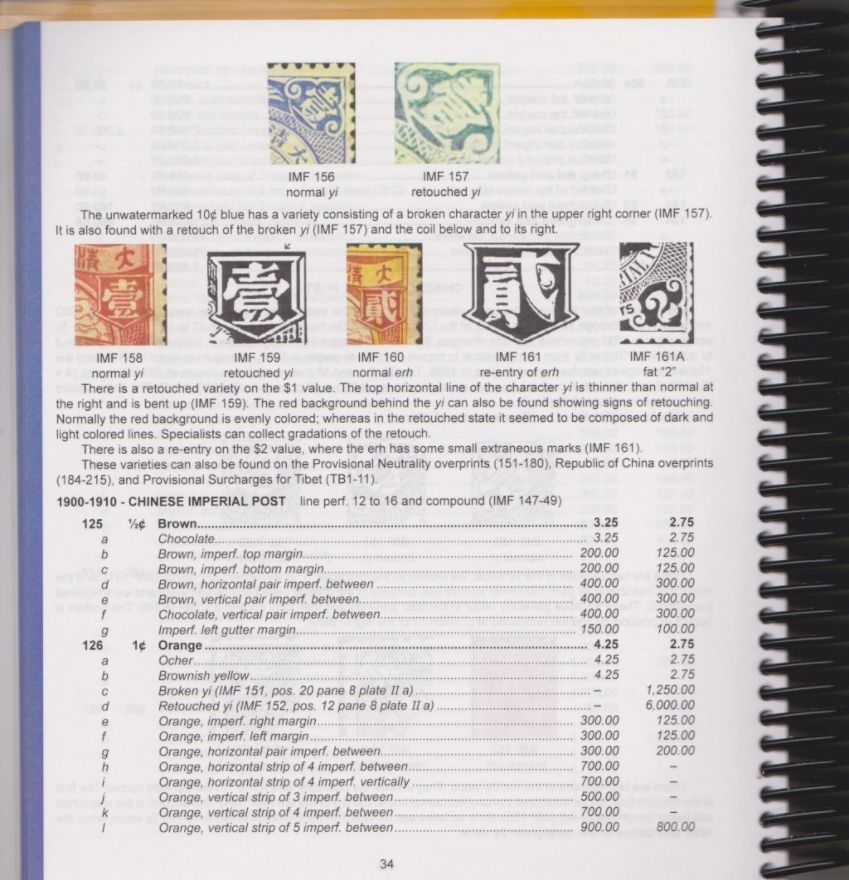
The catalog is huge - almost 500 pages, soft cover with a spiral binding, so it lays flat when open (much like the Canada Unitrade catalog. Wish more specialized catalogs came this way!)

The catalog is also EXHAUSTIVE.  From the introduction, the items not included include :


Also not included are the Local Post Issues of the Treaty Ports (Shanghai etc) which are covered quite well in the Scott Specialized 1840-1940 catalog, and the issues released by the Communists as they took over different regions of China during the civil war of 1945-1949, which considering they are seen as forerunners of the PRC starting in 1949, makes sense not to be included here. Coverage ends in 1949 - the post-flight issues of the ROC on Taiwan after 1949 are not included.  

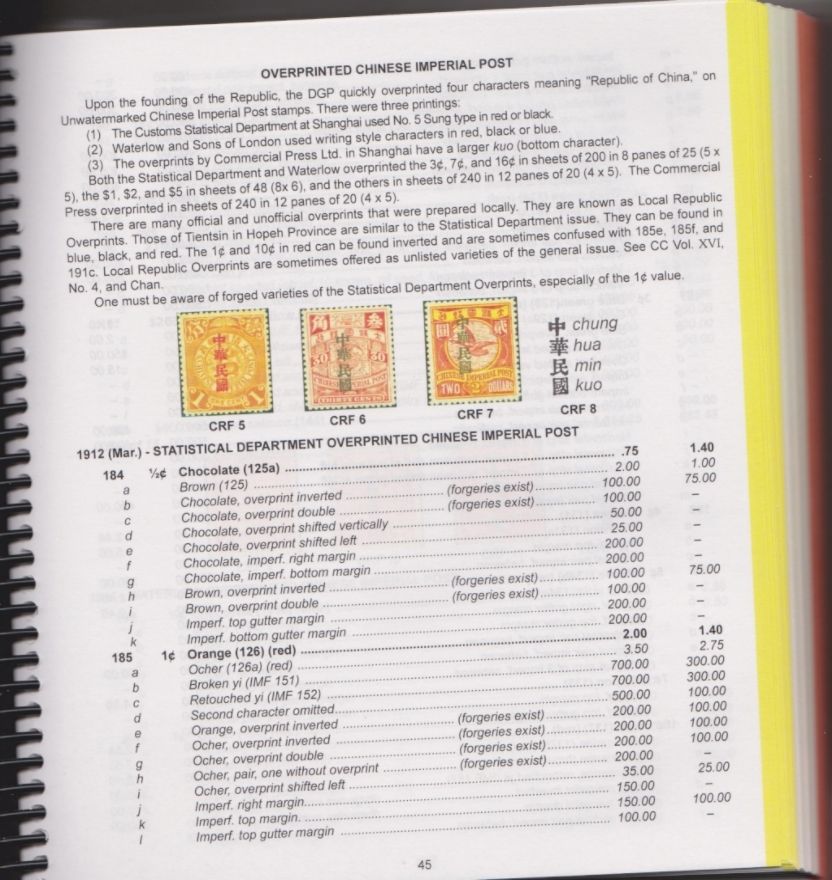
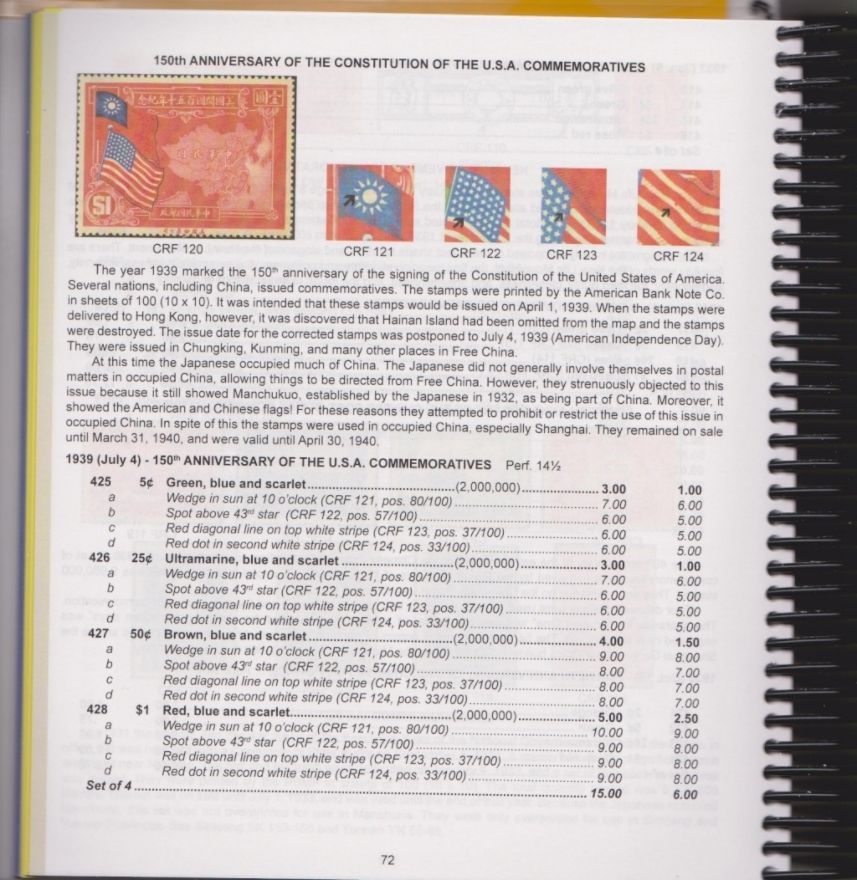
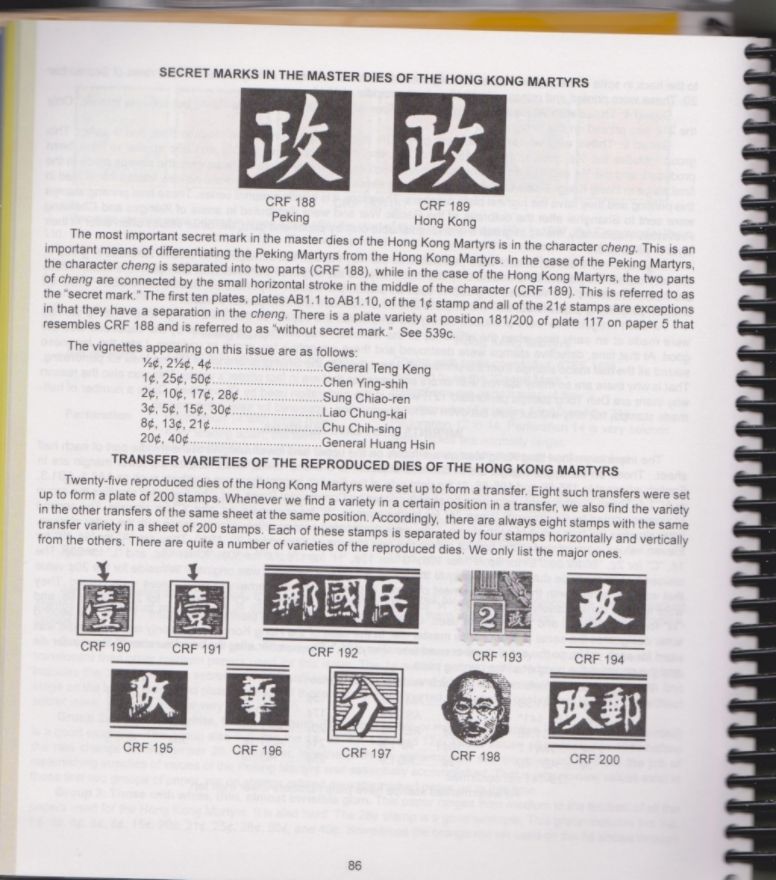
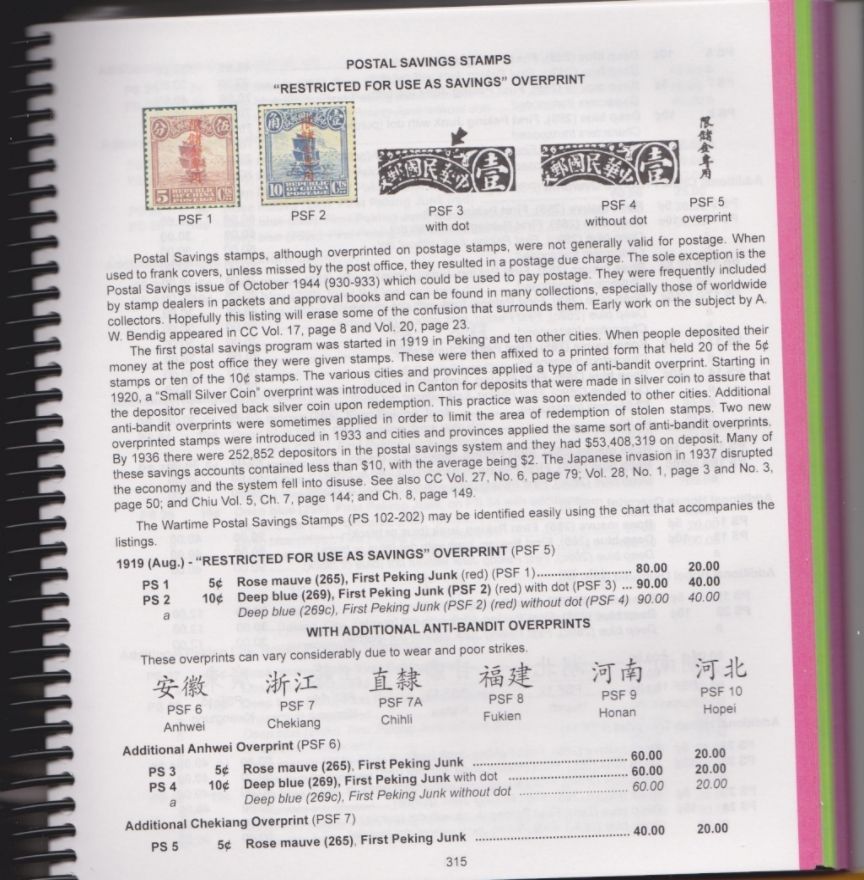
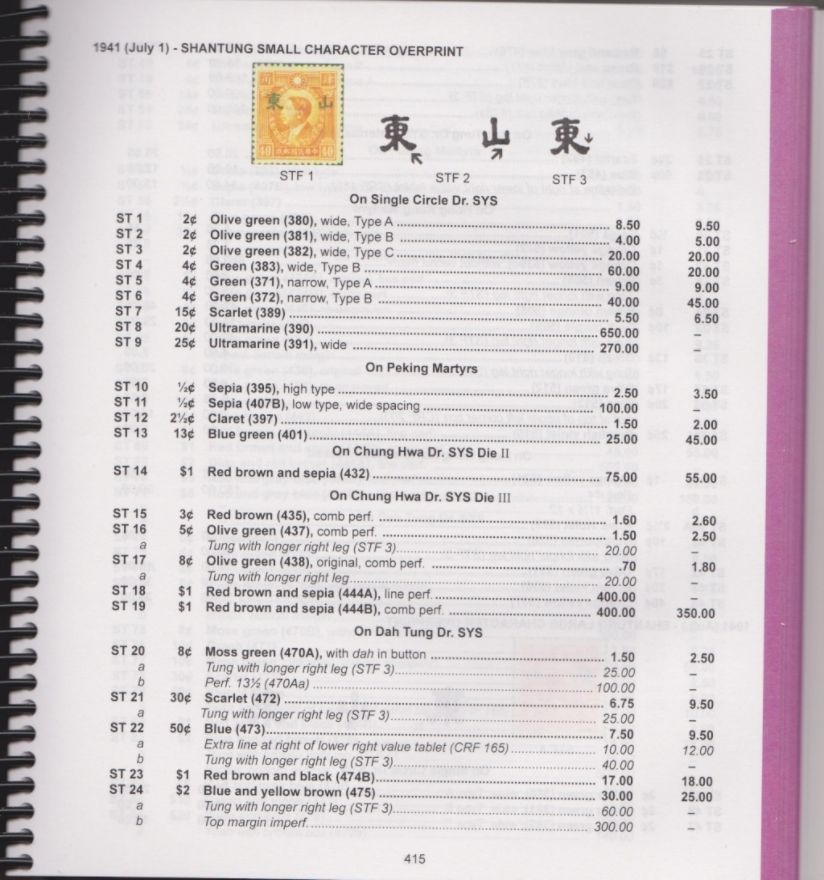
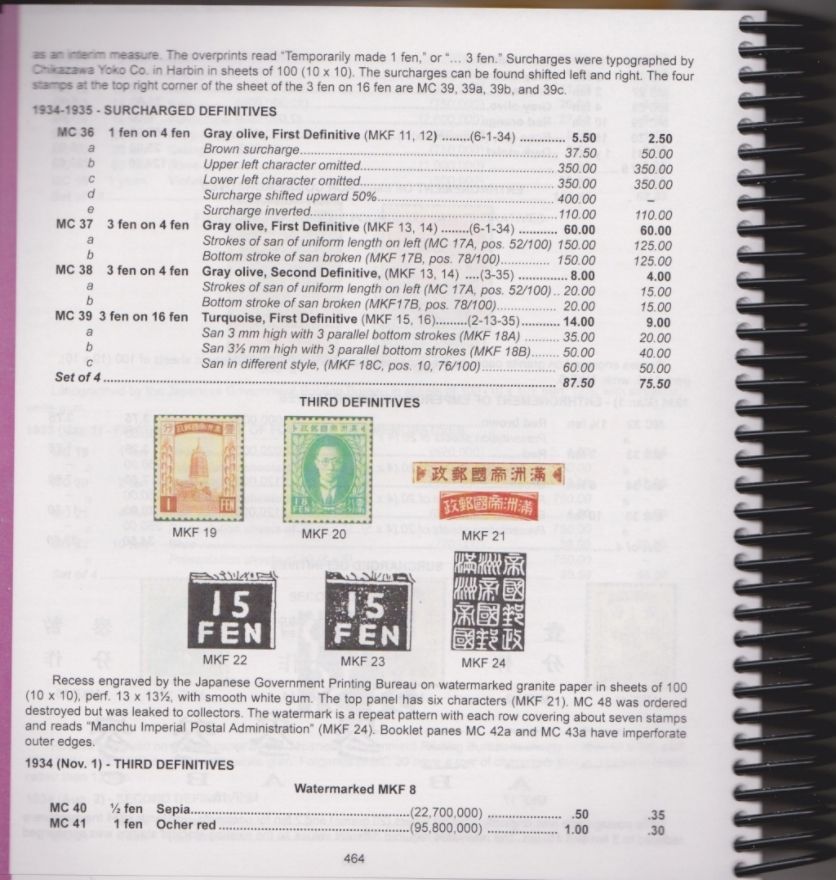
Otherwise...it's definitely an exhaustive specialized catalog of almost 500 pages covering the Late Qing, Republic, Regionals, Wartime Surcharges of the Republic, The inflation surcharges of the 1945-1949 Civil War era Republic (gold and silver yuan), Back of Books (including specialized items like Postal Savings, see below), Japanese regional occupations and Manchukuo.

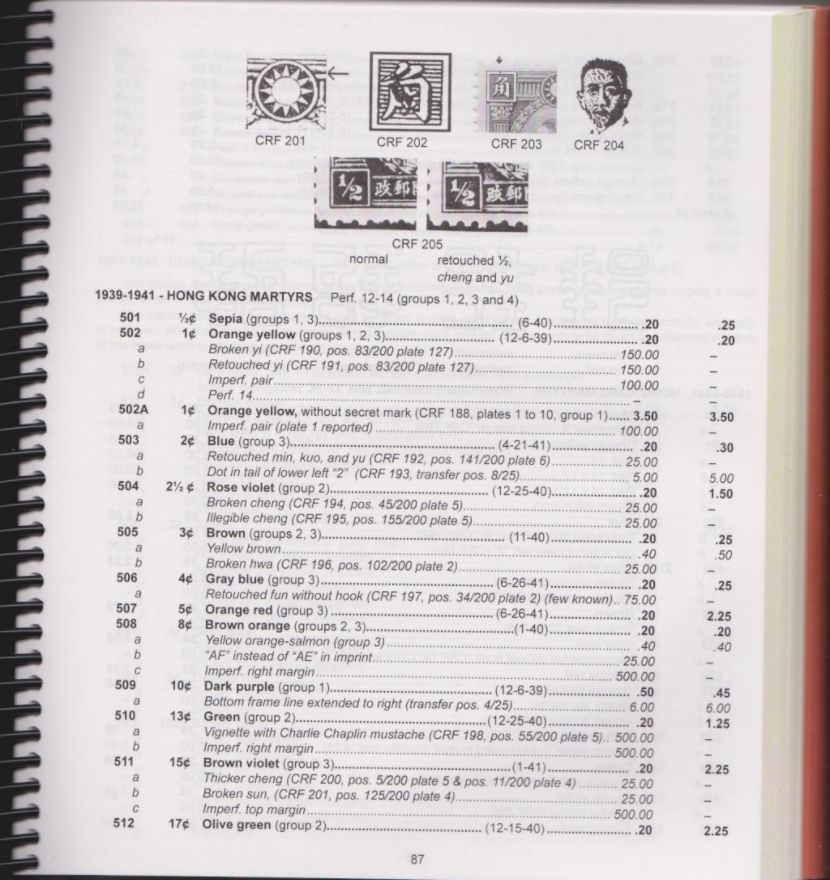
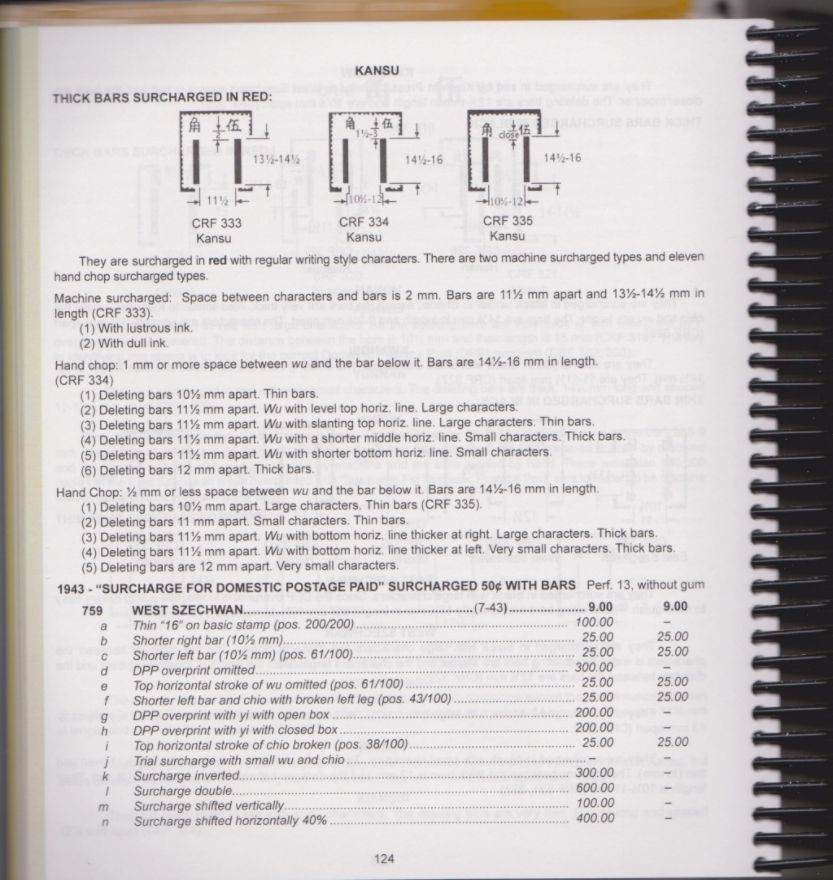
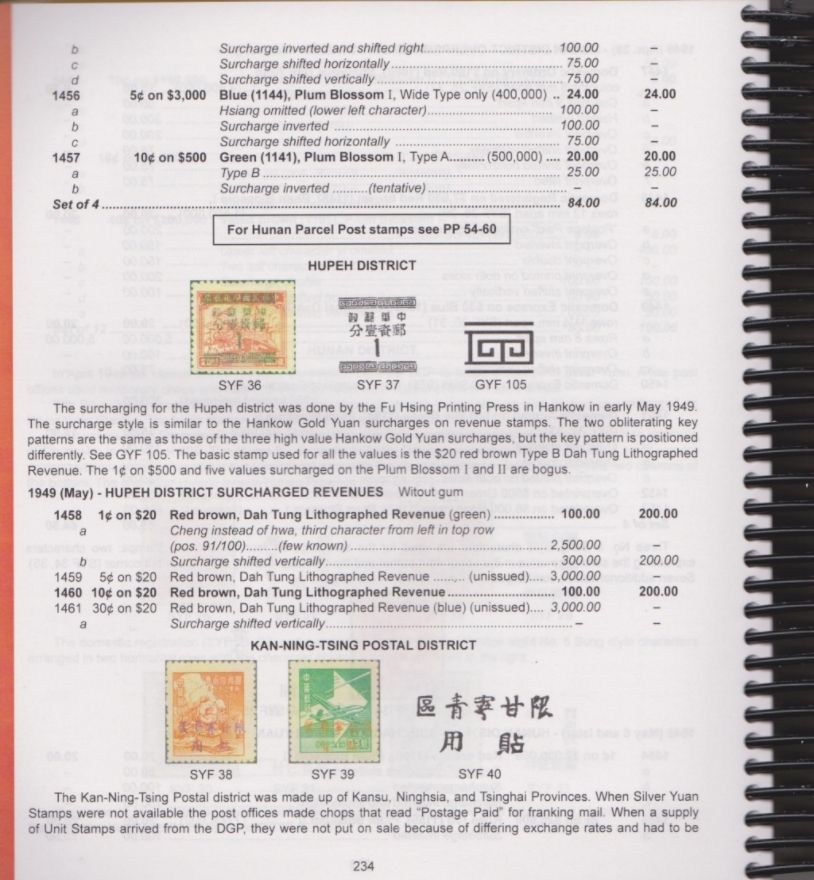
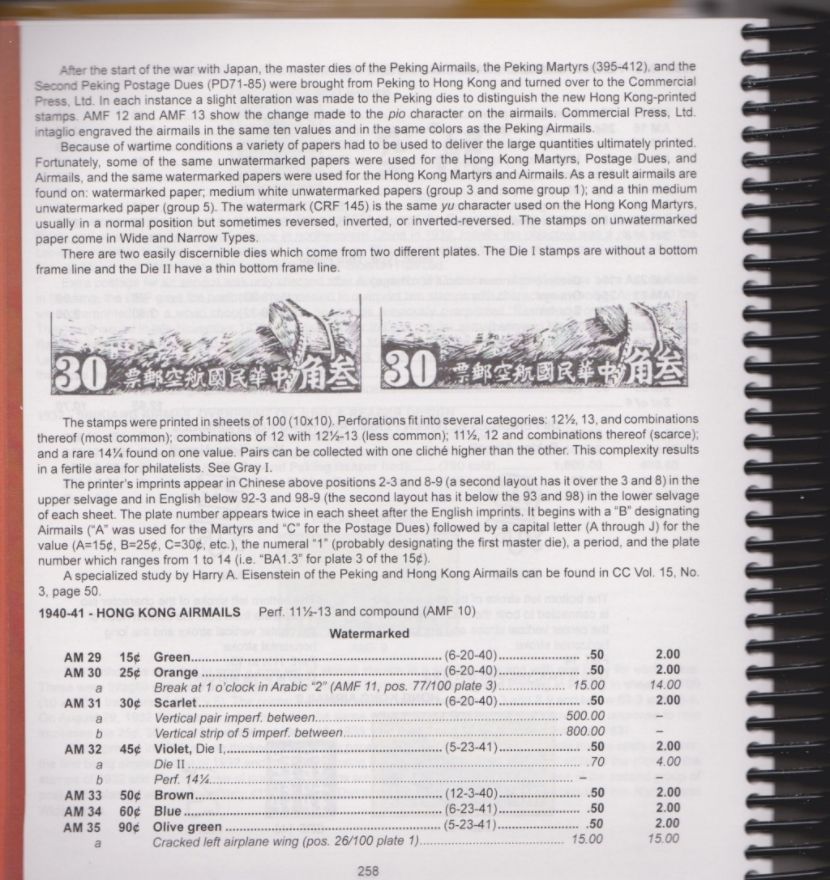
Since pictures speak a thousand words, the rest of this post will be eye candy samples of pages 


The China Stamps Society sells the catalog to members for US$59.99, with non-members paying a US$10 surcharge.  Either way, it is worth every penny especially if you happen to have an old collection and start looking for varieties, that could pay for the cost of the catalog with just one or two lucky finds lurking in an old Big Blue.


Tuesday, December 22, 2015

New Additions To My Philatelic Library Part 2 - Oh Canada!

In my previous post I provided a brief review of the new Farahbakhsh specialized catalog for the Stamps of Iran.  This post I am going to provide a brief review of the latest edition of the Unitrade Specialized Catalog of Canadian Stamps, the other specialized catalog that I recently purchased.


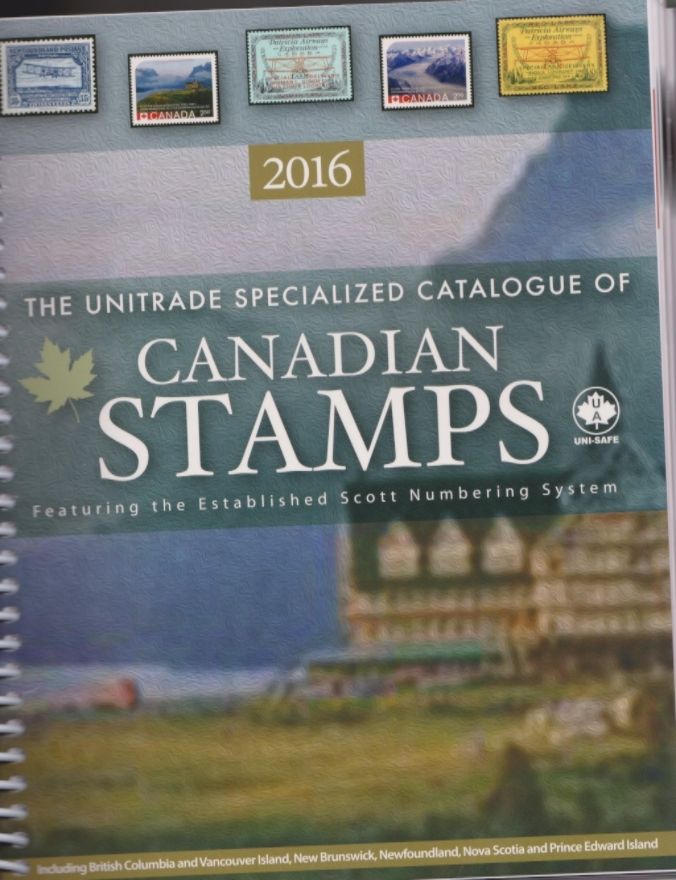
If there is any specialized catalog that deserves to be considered the "Gold Standard" of what a specialized catalog should be then the Unitrade, in my opinion, is the one that does it. It is simply a joy to own, and designed with an eye to being something a collector will make use of every day, not just as an occasional reference.

To start off with, this book is a TOME.  Almost 725 pages, and high quality pages at that, with full color illustrations on a heavier than average paper stock.  Also, the catalog is spiral bound, not solid-bound, which makes for much greater flexibilty in keeping the catalog open to where you need it, something that many other catalogs simply are terrible at when trying to use for more than a quick reference. 

Another benefit for the North American collector, Unitrade licenses the Scott catalog numbering system as the base for its catalog database.  This means that for collectors of Canada here in the USA, there is no problem with catalog number translation at the basic level.  Canada #1 in Scott is Canada #1 in Unitrade.

But from that solid base, Unitrade takes its listings to a whole different level of information that even makes what Scott does with the USA Specialized catalog seem, in some ways, like nothing more than an intermediate level reference.   

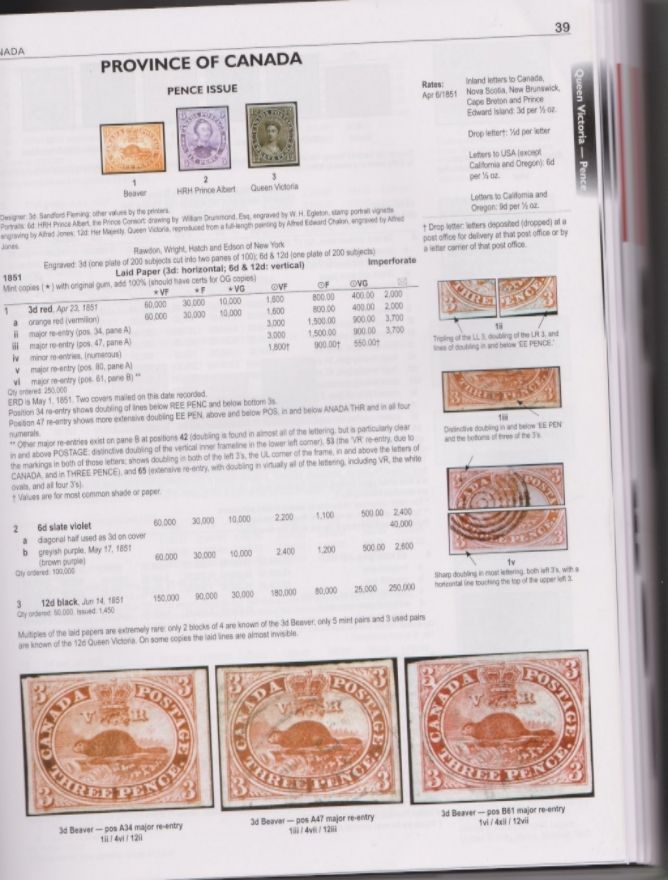
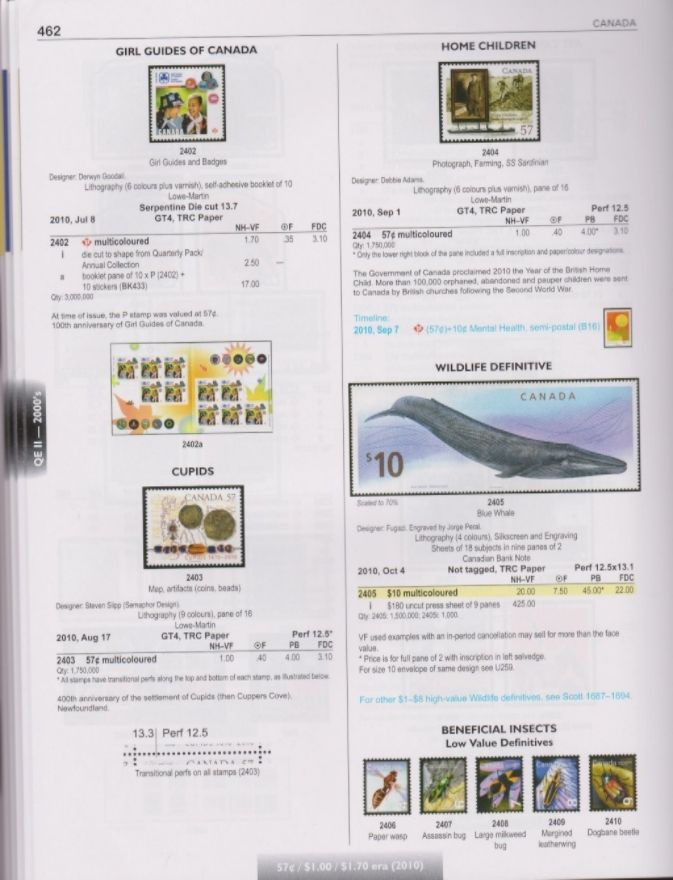
The catalog starts with the issues of the Province of Canada in 1851, with the iconic 3-penny Beaver stamp. But we don't just get a beaver (hmm that doesn't sound right...), with a couple varieties as the Scott Specialized Catalog 1840-1940 provides. Oh no, that is just 3-penny Beaver 101, as you can see below. [Apologies for the scans, the pages of the catalog are slightly bigger than the bed of my scanner, and the spiral binding added additional difficulties in trying to capture as much of a page image as possible.]


Enough beavers to dam up a river in central Nunavut!  And there plenty more on the next pages with the Wove paper issue, with sixteen varieties of the 3-penny listed.

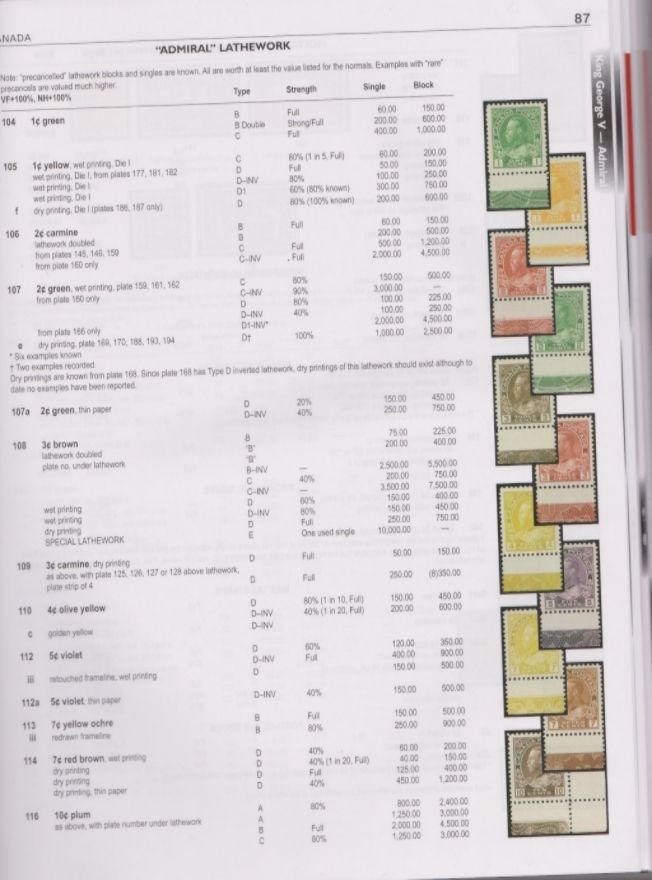
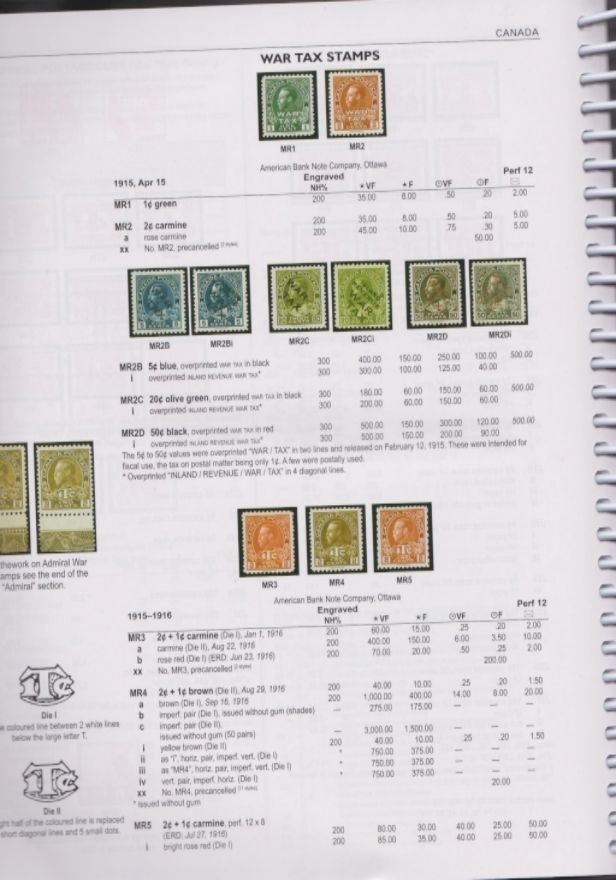
And it's not just the classic issues that get the kind of attention to varieties, color shades, plate flaws and so forth.   Fancy your Admirals??


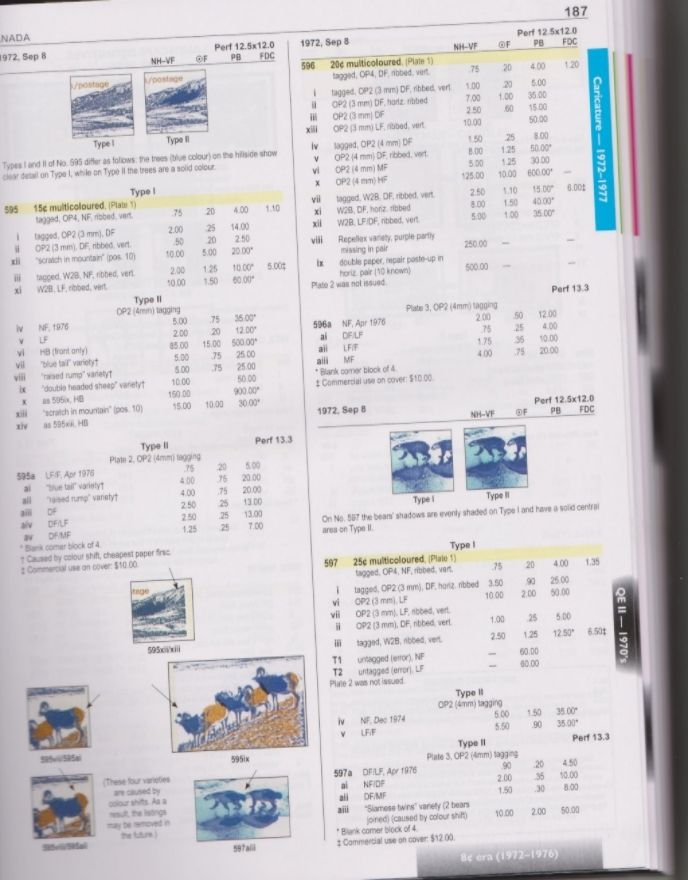
or perhaps your tastes run to the more modern, such as the Landscape defins of the early 1970s


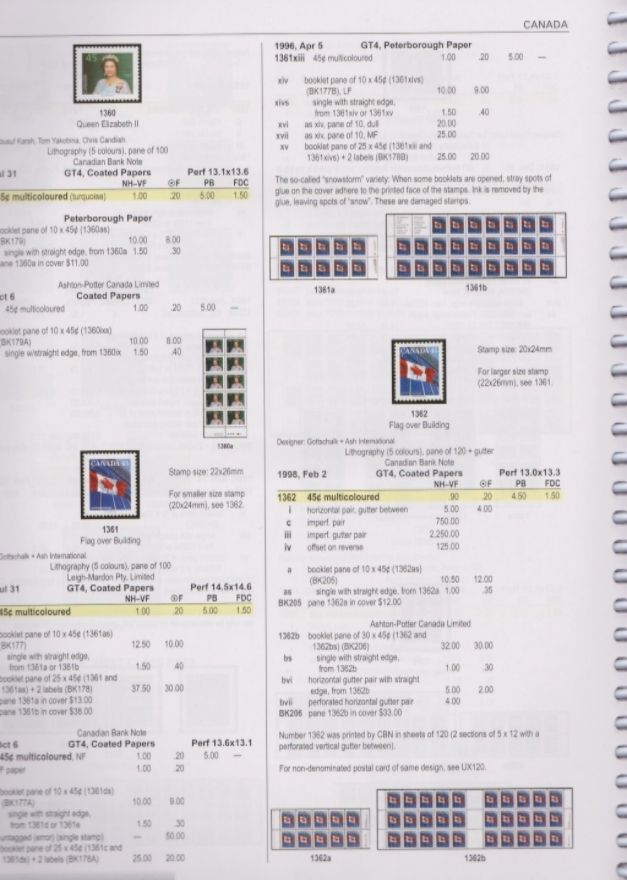
and even contemporary Canadian issues from the past couple decades get plenty of specialized love from the Unitrade editors...


Commemoratives aren't ignored either, with information on print runs, value of First Day Covers, and any varieties produced all provided.

Perhaps back of the book issues are more to your liking. Unitrade has you covered, and how


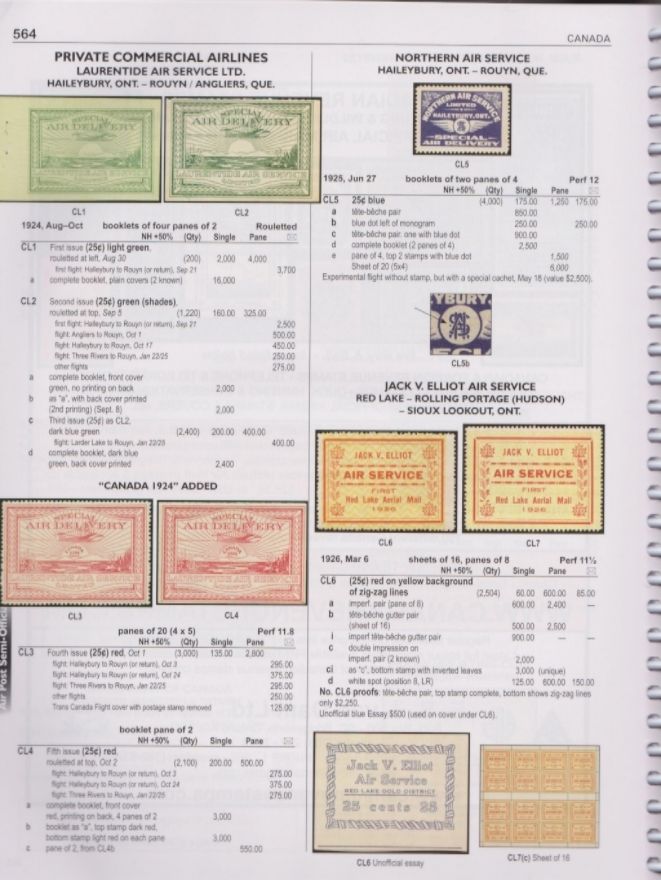
plus there is a great section on the private airmail issues from the 1920s as the new technology of aviation and its utilization to deliver the mails was adopted to help overcome the vastness of the Canadian wilderness


And of course there are the provincial issues for those provinces that were separate colonial administrations before their accession to the Dominion.  Unitrade provides full coverage for this material as well, including things like numeral cancellation rarity guides for each colony (and for early Canada as well)


And then there is of course Newfoundland, which has its own very dedicated collector base and issued its own stamps until it voted to join Canada (just barely) in a 1949 referendum.


Again Unitrade's level of detail on varieties is simply amazing, perhaps for some even overwhelming.

This catalog is simply a pure philatelic joy to own. If every nation had a specialized catalog that combined the level of detail on varieties and specialist material with the physical production quality that the Unitrade 2016 provides with its heavy full color pages and spiral binding, more collectors would definitely consider purchasing these catalogs. 

It is exactly because of catalogs such as Unitrade that I am such a fan of specialized stamp catalogs, and the information they contain provide collectors with so many new collecting vistas to explore once they complete (or near completion within their budget) the basic collection.  


Wednesday, December 16, 2015

New Additions To My Philatelic Library Part 1 - The fascinating world of Iranian Philately

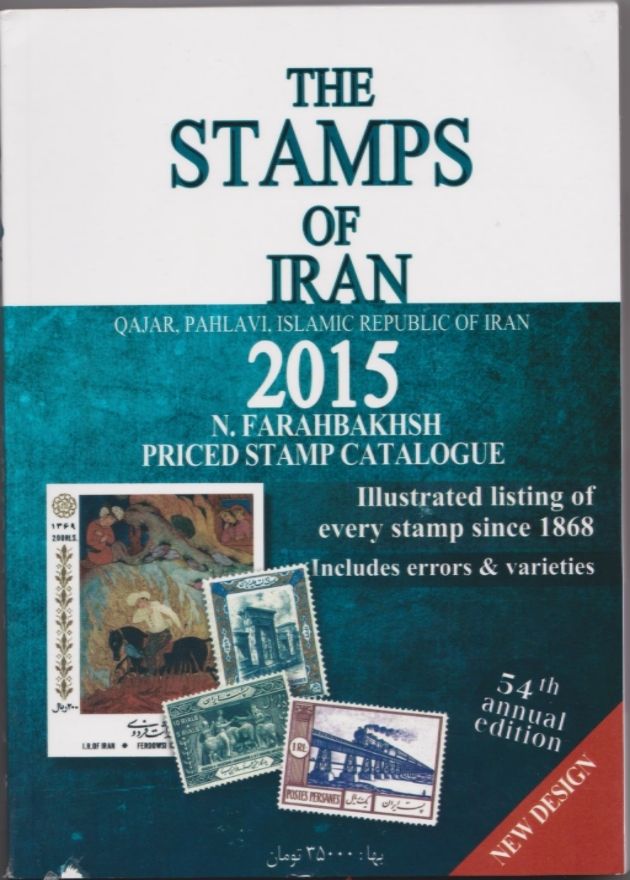
So work has been completely crazy for me lately, working six day weeks with the holidays just around the corner.  My free time has been sparse to say the least (especially since I am also currently involved in Beta Testing a PC historical grand strategy game, which has been a blast!) But I haven't totally ignored my philatelic pursuits. And over the past couple weeks I have added a couple of excellent new specialized catalogs to my philatelic library. This post will discuss one of them, the Farahbakhsh Stamps Of Iran 2015 Catalog, and the next blog in the next few days will cover the 2016 edition of the Unitrade Specialized Catalog Of Canadian Stamps.

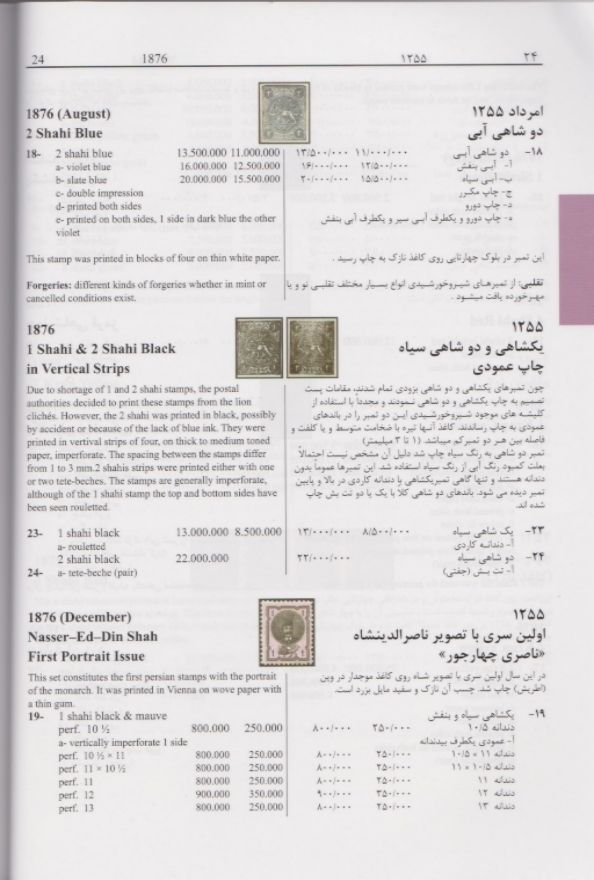
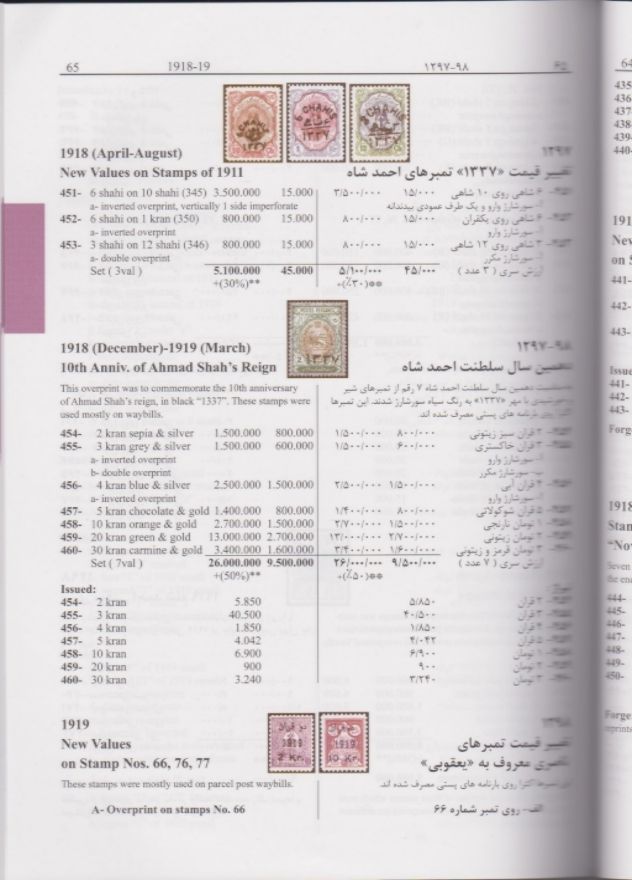
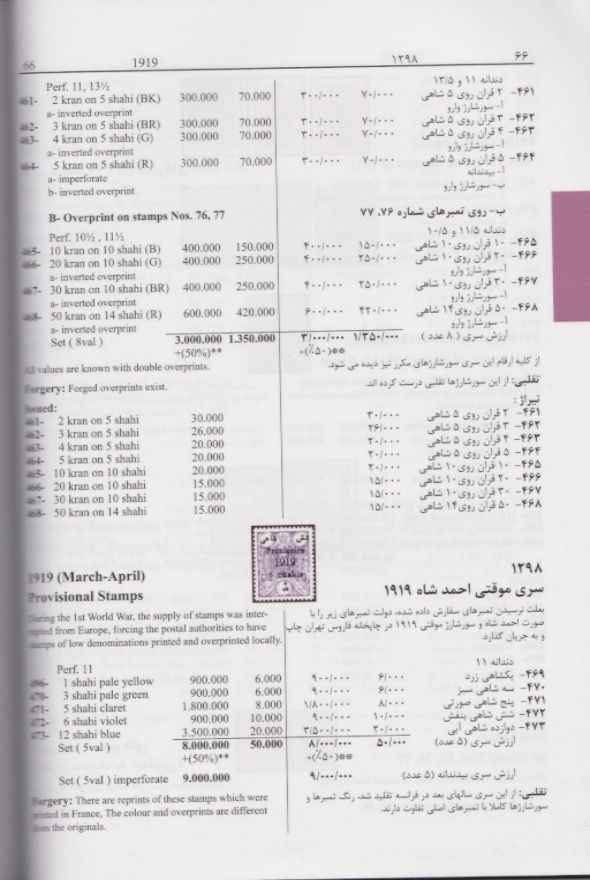
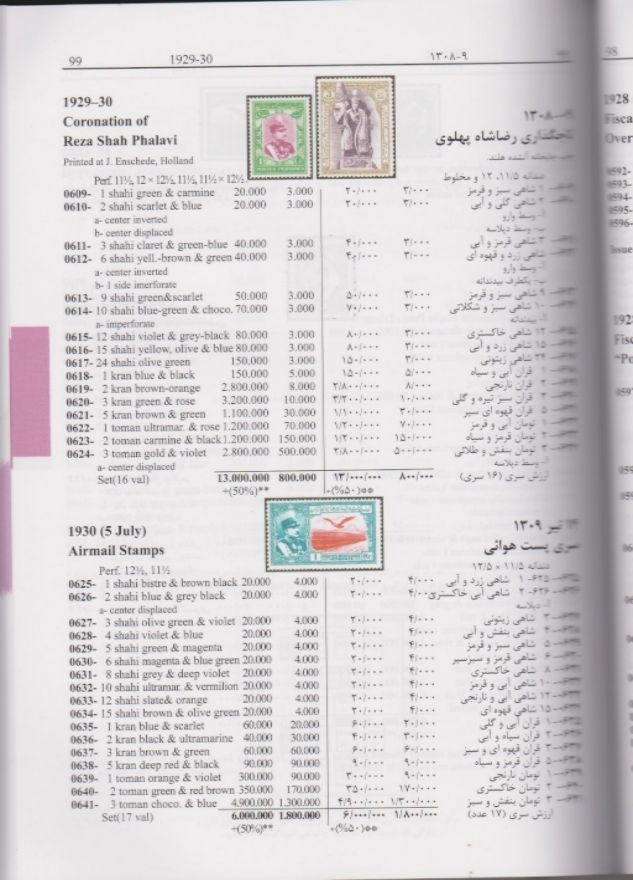
As someone who has a Masters, and worked on the PhD in history focusing on the history of Islamic Civilization, the philately of the Islamic World fascinates me. The stamps of Iran are fascinating. The classical issues of the Qajar era include lots of color, perforation and paper varieties, as well as so many forgeries and reprints as to scare many collectors away from these stamps.  A good solid specialized reference is therefore vital to navigating the minefield of classical Iranian philately, and the Farahbakhsh catalog is considered by many philatelists of Iran as the gold standard catalog of record for Iranian stamps.


Farahbakhsh himself was an amazing man. From the obituary published in 2013 by the Iran Philatelic Study Circle :

On Saturday 19 January 2013, one of the great men of Iranian Philately, Feridon Novin Farahbakhsh passed away. Through his catalogs and exhibits he expanded our knowledge as well as promoted Iranian philately. My he rest in peace.
Mr. Farahbakhsh was born into a 'stamp family' on 6 September 1930. His farth was a well-known stamp dealer in Iran and started his first business in 1925. In 1951 he left Iran to go to Germany to study engineering. In 1953 he returned to Iran and continued his studies at Teheran University until 1958 when he received his Bachelor degree in Language (German and English). At the same time he started his own stamp business.
In 1960 he was greatly influenced by the superb exhibit of Iranian classic stamps presented by late Dr. Mohammad Dadkhah. This inspired him to one day show such great collection at a World Stamp Exhibition. After many years of building his collection and exhibiting, he finally reached his dream by receiving the Grand Prix International at BRASILIANA 83 in Rio. He subsequently exhibited in many more international shows.
He was Iran's FIP National Commissioner between 1978 and 1987 and subsequently from 1992 until his passing. Mr. Farahbakhsh was also appointed as legal expert in stamp by Iran Justice Department. Besides the well known Iran Stamp Catalog he published every year, he also published "Early Lions Stamps of Iran",  "The early postmarks of Iran" and "The Postal Stationary of Iran".
The business has been continued by his son, as has the catalog, and the 2015 edition represents the catalog's 54th edition.

The book is published in Iran, and is bilingual in Farsi and English.  Being a book in Farsi, the page order is from right to left, the reverse of the page order in most Western books. If you are not used to this format (I am due to years of reading documents in Ottoman Turkish, Farsi and Arabic as a grad student) it may take some getting used to.  Prices are in Iranian Rials, which currently is trading at US$1.00 = IRR 29850.00 (!!!) so while prices look high, they are in a severely depreciated currency.

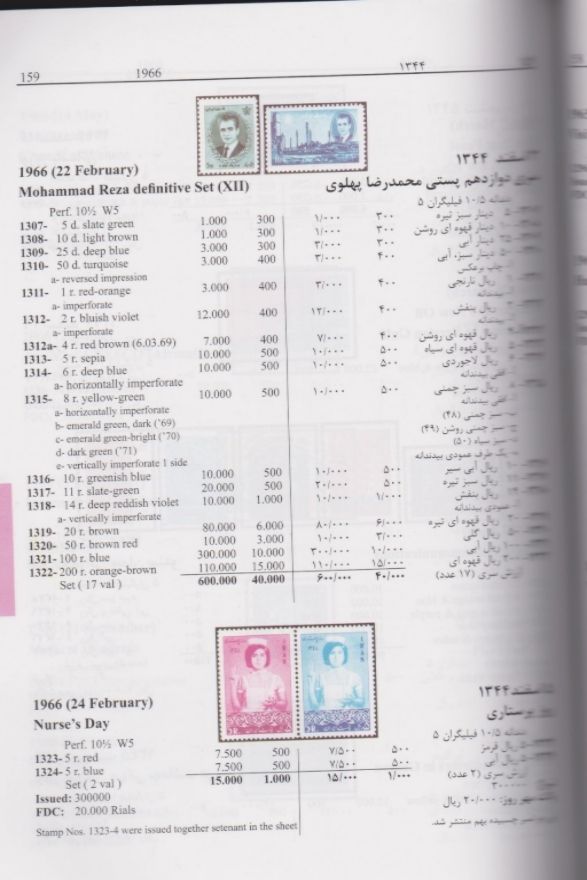
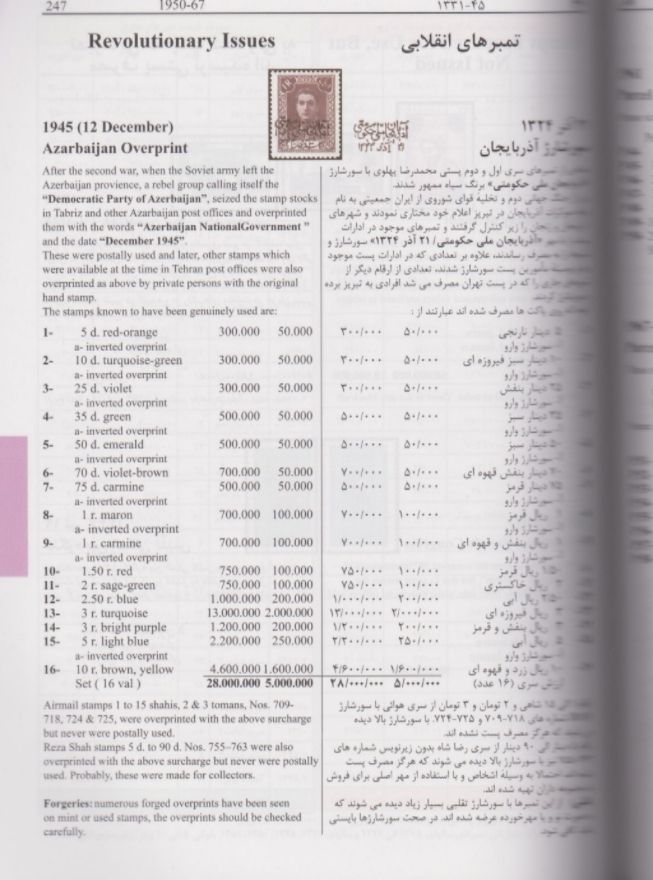
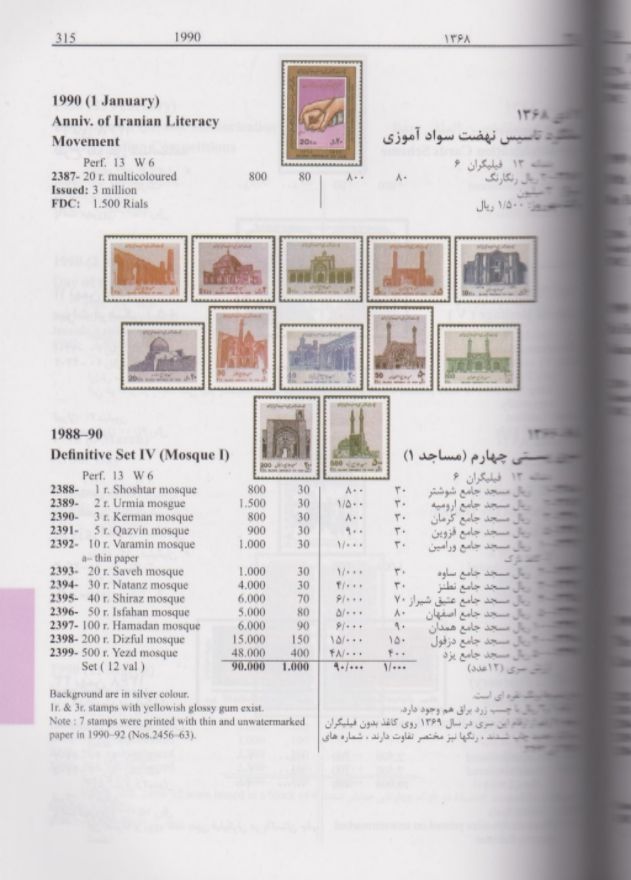
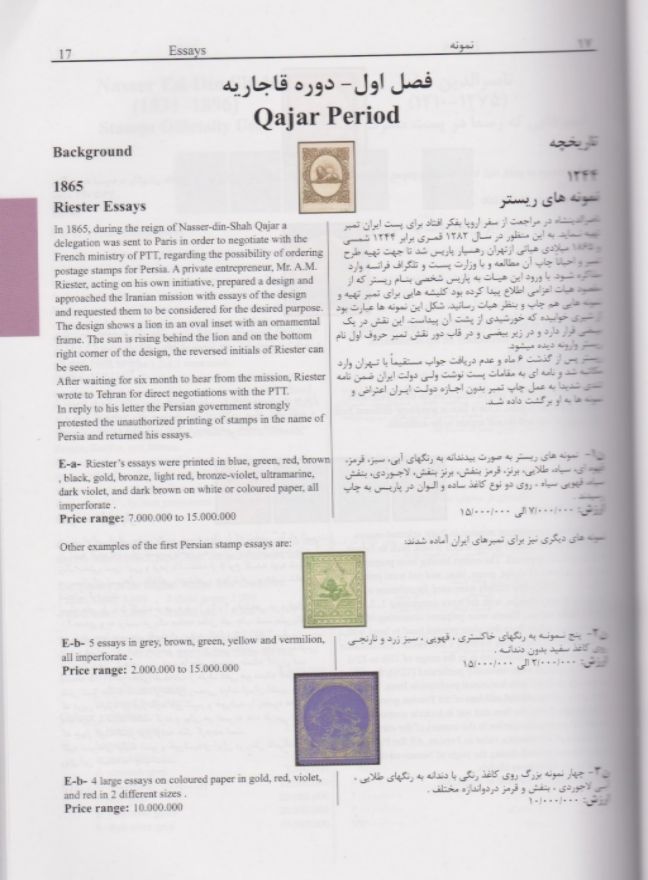
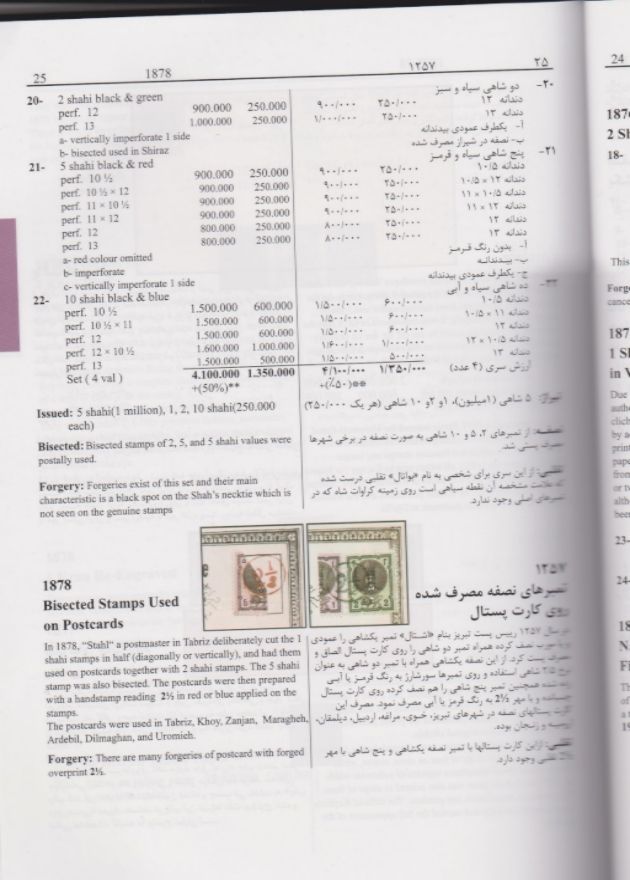
Below are some scans from different parts of the catalog just to give an idea of the depth and flavor of the catalog.


As you can see, a wealth of information available.  All in all worth the price (UKP 30 from Prinz UK/Vera Trinder, plus shipping, so about US$50 altogether.)  The only drawback I have is that my copy is missing about 20 pages from the end of the catalog, covering the stamp issues of late 2011- mid 2014. Don't know if it just a production flaw in my copy, or a problem with the entire run of published copies, but have sent an email to Prinz UK to notify them of the issue. 

In the end, the most important part for me, the coverage of the classical issues in all their glory, is all there and the missing pages do not make the catalog copy I received useless.

Now, time to start planning to build an Iranian collection!