I've been relatively scarce the past several weeks and for that I apologize. Work has been very hectic lately for me, still working 48 hour/week shifts. Also had some family drama, as my mother-in-law first moved in with my partner and I, and then a week later passed away. My mother-in-law was 86 and was in late-stage conditions of Alzheimer's Disease, so while her passing was not completely unexpected, the demands on my free time were taken up for the most of May by preparations to move her in and then the unexpected demands of dealing with my mother-in-law's passing, as my partner was her last surviving child.
June has only been a continuation of the stresses of May at work, though I finally took my first week of vacation the week of the 19th to the 25th. It was my first vacation in nine months, and had been originally scheduled for April but due to my hospitalization in April due to a blood infection, I had to reschedule the vacation week. I have another week of vacation in July, but as I have friends from overseas coming to visit and plans to spend a few days in the St Lawrence Valley and then in Montreal and Ottawa, I had to spend a good bit of my June vacation preparing for that. At least I can say life is not dull, but free time to spend with stamps and my other hobbies has been at a premium.
The good news is that July is looking less hectic to a degree. After months of being short staffed, my department at work is now full staffed as of this week. Once we get past the 4th of July holiday, I should be working 40 hour weeks going forward. You do not realize how much an extra day away from work can help keep you sane and give you personal time to do things you want to do! My friends from overseas will be here most of the last two weeks of July so that will be a demand on my free time, but after that I should finally be able to have more time to work on stamps and my other hobbies.
This is not to say I have completely ignored stamps over the past couple months. I was not able to attend World Stamp Expo in New York as it was held during the Memorial Day holiday, one of the busiest holidays for meat and seafood departments, and with the weather having been so nice this year it was really busy and gives me pause to think how busy the 4th July holiday will be especially if the weather is as gorgeous and warm as it has been here the last couple weeks.
I was able however to get a chance to attend COLOPEX 16 here in Columbus. The regional APS show held each year by the Columbus Philatelic Community, it was a nice show. Not quite the grand show it used to be in the 1990s to be sure, but nice enough as it was with some great exhibits and about 25 dealers in the bourse accompanying the show. Found some nice French colonial material that day, and overall it was a great afternoon of philatelic fun for me. In 2018 the annual APS Stamp Show will be held here in Columbus, so that will be something the local philatelic community will be gearing up to host. If it is as good as previous APS shows held here in Columbus it will be a great philatelic time to be had by all.
Now that things in Real Life are beginning to allow me more free time, I am going to start a new series of posts here in this blog over this next several weeks. The idea of the posts was suggested to my by philatelic blog master Jim of the Big Blue blog. As those who regularly read my ramblings here on this blog, I have a love of specialized catalogues, and my library continues to grow as I add more countries into the mix. In fact I think I am currently focusing more on the catalogues than on stamps themselves, in part because I am setting up my collections and so need to have the catalogues now to properly lay out my pages for all the varieties that specialist catalogues provide information. Jim suggested that I consider a series of posts reviewing the various catalogues in my collection and compare them to the Scott Specialized 1840-1940 catalogue that many collectors use when they want access to a bit more information on specialized material from the golden age of philately.
Sounded like a winner to me, so the plan I am working on is to start posting the series one country/catalogue at a time. Hopefully the readers of this blog will find these review useful and, as always contribute suggestions for improvement. And a special thank you to Jim for the excellent idea he planted in my ear. I can only hope my postings are remotely as educational as his posts for BigBlue, though I will be covering the whole catalogues I review which means there will be quite a bit of post-1940 discussion as well.
And speaking of Specialized Catalogues, with the sudden approximately 10% drop in the value of the UK£ against the US$ in wake of the Leave victory in the EU referendum, British catalogues are now a nice bit cheaper than they were a week ago. Since I think this drop in value is only somewhat temporary, I decided to place an order for a bunch of Commonwealth Specialized catalogues from Stanley Gibbons. The fact that SG is also still facing a great deal of its own financial turmoil (its stock is now down to approx UK£0.12 per share now) and the potential that something bad may happen to SG in the near future as a company also motivated my decision. The result - I have 13 catalogues heading my way from Britain and hopefully they will be here sometime in the next week.
If you are in the USA and collect British and or Commonwealth material, now is an excellent time to pick up some items from British retailers while the UK£ readjusts in valuation to deal with the new realities of the UK leaving the EU. Make hay while the sun shines!
Showing posts with label Big Blue 1840-1940 blog. Show all posts
Showing posts with label Big Blue 1840-1940 blog. Show all posts
Tuesday, June 28, 2016

Friday, April 29, 2016
A what if of philately...the US overseas possessions....(Repost)
This is a repost of an article originally posted on v. 1.0 of this blog on 24 August 2015
The most recent post to JKJblue's excellent blog deals with the stamps of post-partition Samoa. This of course means the stamps issued for the western half of the Samoa archipelago, as from the time of its annexation by the United States in 1900, the eastern half of the archipelago used (and still uses) the postage stamps of the United States.
This is not an exception for American overseas terrtories. With the exception of the Philippines, which did issue its own postage stamps during the United States administration of 1899-1946 (likely because the Philippines had its own currency at the time of annexation, the Philippine Peso, and that currency was retained by the US Administration), and the overprints issued in the immediate aftermath of the Spanish-American war of 1898 for Guam and Puerto Rico, American overseas terrritories have used the postage stamps of the United States from the time they came under American rule.

Similarly, after the US annexation of Hawaii in 1898 separate postal issues would be superceded by regular United States issues in 1901.

The same fate would befall the Western Virgin Islands after they passed from Danish to American rule in 1917 when the US government bought the islands from Denmark.

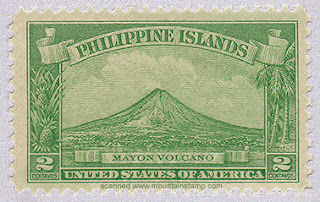
I always thought it was a pity that the overseas external territories *cough colonies* of the United States lost their philatelic identity so quickly after they came under American administration. As the Mount Mayon stamp from the Philippines shows, the potential for some truly beautiful stamps that depicted these, to Americans in the contiguous 48 states, exotic lands governed by the United States would have been great.
The Postal Service would, to a degree, do this with the Overseas Territories issues of 1937, although Guam and American Samoa were not given any recognition in this series.

A lovely set, isn't it? Now imagine what *could* have been had the external territories been given postal autonomy to issue their own stamps under US Postal Service oversight.
But...it never came to pass. Alaska and Hawaii acceded to Statehood in 1959. While Puerto Rico became a Commonwealth/Estado Libre Asociado in 1952, it did not regain postal autonomy, and given recent events on the island, the likelihood it will become a full-fledged state in the next decade seem quite high. And the US Virgin Islands, American Samoa and Guam remain external territories, with varying degrees of self-government, and (non-voting) representation in the US House of Representatives. And they continue to use regular United States postage stamps.
On a similar note, I think it is also sad that the five French overseas departments (départements d'outre-mer) also have lost philatelic autonomy. No more separate issues for Guadeloupe, Martinique, French Guiana, Reunion or, more recently, Mayotte. The distinctive cultures of these five territories produced some gorgeous stamps during their philatelic lifetimes, and while the French have issued stamps depicting scenes or personalities from these regions from time to time over the past sixty years, something I think was definitely lost to philately with the end of their philatelic independence.


Of course, philatelic independence can also go horribly wrong, as the recent philatelic histories of the external realms of the Kingdom of the Netherlands - Curacao, Aruba, Saint Maarten, and the Caribbean Netherlands communes of Saba, Saint Eustatius and Bonaire, will attest. Philatelic independence for these external territories had in the past five years led to their selling their philatelic souls to a philatelic agency that issues stamps in their name with often only little relevance to the local cultures. But this is a recent phenomenon, and in particular I always found the stamps of Aruba in particular to be gorgeous until it made its bargain with the philatelic devil.


So perhaps this is one of those double-edged sword issues, since the temptation by almost all postal services these days semes to be to to use their philatelic programs as cash-cows, cashing in on the popular topics and generally ignoring the culture, history and society of the countries or territories the stamps purport to represent.
The most recent post to JKJblue's excellent blog deals with the stamps of post-partition Samoa. This of course means the stamps issued for the western half of the Samoa archipelago, as from the time of its annexation by the United States in 1900, the eastern half of the archipelago used (and still uses) the postage stamps of the United States.
This is not an exception for American overseas terrtories. With the exception of the Philippines, which did issue its own postage stamps during the United States administration of 1899-1946 (likely because the Philippines had its own currency at the time of annexation, the Philippine Peso, and that currency was retained by the US Administration), and the overprints issued in the immediate aftermath of the Spanish-American war of 1898 for Guam and Puerto Rico, American overseas terrritories have used the postage stamps of the United States from the time they came under American rule.

One of the most beautiful stamps issued during the US Administration of the Philippines, the 1932 2c Mount Mayon pictorial (image courtesy mountainstamp.com)
USA 1c Benjamin Franklin stamp of 1894 overprinted -GUAM- for use on that island after its capture by US forces during the Spanish-American War of 1898. Regular USA issues would be used on the island after 1901. (image courtesy pecollectibles.com)

1899 stamp issued by the US administration in Hawaii, the high value in a set of three stamps that would be the last separate issue for Hawaii before its stamps were replaced by regular US stamps. (image courtesy treasurecoastamps.com)

Danish West Indies stamp depicting King Christian X, one of a set of eight issued in 1915 that would be the last stamps released before the transfer to American sovereignty in 1917 and the end of the Western Virgin Islands separate philatelic identity (image courtesy linns.com)
I always thought it was a pity that the overseas external territories *cough colonies* of the United States lost their philatelic identity so quickly after they came under American administration. As the Mount Mayon stamp from the Philippines shows, the potential for some truly beautiful stamps that depicted these, to Americans in the contiguous 48 states, exotic lands governed by the United States would have been great.
The Postal Service would, to a degree, do this with the Overseas Territories issues of 1937, although Guam and American Samoa were not given any recognition in this series.

The 1937 External Territories issue of the US Postal Service, honoring Hawaii, Alaska, Puerto Rico and the US Virgin Islands, but NOT Guam or American Samoa. (image courtesy delcampe.net)
But...it never came to pass. Alaska and Hawaii acceded to Statehood in 1959. While Puerto Rico became a Commonwealth/Estado Libre Asociado in 1952, it did not regain postal autonomy, and given recent events on the island, the likelihood it will become a full-fledged state in the next decade seem quite high. And the US Virgin Islands, American Samoa and Guam remain external territories, with varying degrees of self-government, and (non-voting) representation in the US House of Representatives. And they continue to use regular United States postage stamps.
On a similar note, I think it is also sad that the five French overseas departments (départements d'outre-mer) also have lost philatelic autonomy. No more separate issues for Guadeloupe, Martinique, French Guiana, Reunion or, more recently, Mayotte. The distinctive cultures of these five territories produced some gorgeous stamps during their philatelic lifetimes, and while the French have issued stamps depicting scenes or personalities from these regions from time to time over the past sixty years, something I think was definitely lost to philately with the end of their philatelic independence.

Iconic low value stamp from the 1947 pictorial issue of Guadeloupe. Alas this would be the final set of stamps issued specifically for the island, as stamps of France itself would replace Guadeloupe stamps shortly thereafter. (from author's collection)

Stamp issued by France in 1970 depicting the Rocher du Diamant in the overseas department of Martinique. Martinique, like Guadeloupe, issued its last stamps in 1947. A beautiful stamp to be sure, but only one of a handful of stamps released in the past nearly seventy years depicting the overseas departments (image courtesy delcampe.net).

Aruba 1993 Folklore issue, from the days when Aruba's philatelic production was conservative, relevant to the island, and the stamp designs in general of a very high quality. (image courtesy delcampe.net)

Aruba 2014 Classic Cars issue, released by the philatelic agency the Aruba Post Office sold its soul to. Higher-than necessary face values, little cultural resonance to the island, and less that stellar artwork.(image courtesy delcampe.net)
Are Philatelic "Rogue States" helpful or harmful to stamp collecting???? (Repost)
This is a repost from my orignial blog posted on 8 August 2015
Over at his excellent Big Blue 1840-940 blog as part of his post on the classic era stamps of St Vincent, jkjblue discusses some interesting data he crunched comparing stamp output to population for modern issues (he based his study on the issues of 1980 to 2012). His results were quite interesting based on the number of stamps released per 1 million people in population
"The Top 51
(Total Stamp issues 1980-2012 normalized for one million population )
1. Grenada Grenadines – 4410/.008* = 551,250
2. Grenadines of St Vincent – 3153/.009* = 350,333
3. Nevis – 2753/.009 = 305,888
4. Palau – 3256/.019 = 171,368
5. Antigua & Barbuda – 4423/.064 = 69,109
6. Grenada – 5528/.1 = 55,280
7. St Vincent – 6586/.121 = 54,429
8. Dominica – 3467/.065 = 53,338
9. Marshall Islands – 3056/.066 = 46,303
10. St Thomas & Prince – 4363/.155 = 28,148
11. Micronesia – 2408/.13 = 18,523.
12. Maldives – 4011/.3 = 13,370
13. Guyana – 7606/.7 = 10,865
14. Gambia – 6293/1.1 = 5,720
15. Guinea-Bissau – 5855/1.2 = 4,879
16. Comoros – 2535/.6 = 4,225
17. Liberia – 4990/2.6 = 1,919
18. Guinea – 8750/7.5 = 1,166
19. Mongolia – 2591/2.6 = 996.5
20. Sierra Leone – 5204/5.3 = 982
21. Central Afr. Rep. – 3205/3.4 =942.6
22. Togo – 3202/4.3 =744.6
23. New Zealand – 2178/3.7 = 588.6
24. Nicaragua – 2430/4.4 = 552.3
25. Libya – 2259/5.0 = 451.8
26. Mozambique – 5569/16.5 = 337
27. Cuba – 3189/11.1 = 287.3
28. Portugal – 2330/9.9 = 235.4
29. Belgium – 2283/10.4 = 219.5
30. Hungary – 2197/10.2 = 215.4
31. Ghana -3372/18.1 = 186.3
32. North Korea – 4128/22.2 = 186
33. Cambodia – 2110/11.6 = 181.9
34. Australia – 3188/17.9 = 178.1
35. Tanzania – 4806/31.3 = 154
36. Romania – 2992/22.6 = 132.4
37. Uganda – 2742/21.6 = 126.9
38. Taiwan – 2442/22.1 = 110.5
39. Venezuela – 2175/23.3 = 93.3
40. Spain – 2297/39.2 = 58.6
41. France – 3080/59.0 = 52.2
42. Bulgaria – 2213/42.9 = 51.6
43. Philippines – 3481/68.6 = 50.7
44. Great Britain – 2741/59.1 = 46.4
45. Japan – 4870/126.2 = 38.6
46. Thailand 2305/60.6 = 38.1
47. Vietnam – 2567/77.3 = 33.2
48. USSR/Russia – 3030/147.1* = 20.6
49. Brazil – 2296/157.1 = 14.6
50. United States – 3518/281.4 = 12.5
51. China – 2915/1,246.9 = 2.4"
Source : Big Blue 1840-1940 Blog
The top 20 nations are of course nations that have huge stamp outputs and small populations, and are dominated by nations represented by a few (in-)famous philatelic agents who release issues in the names of these nations depicting all sorts of topical themes, from Cats and Dogs to Pop Stars and everything (and anything) in between.
To a large percent of the stamp collecting community, these -stamps- are little more than glorified wallpaper being peddled under often questionable circumstances with little relevance to the nations they purport to represent, all in the quest to part (mainly topical) collectors from their coin.
Exploitative stamp issues released with an eye to cashing in on collector interest is of course nothing new. The United States Columbian Exposition Commemorative of 1893, an issue of 16 stamps in a range of values from US$0.01 to US$5,00 (which in 2015 dollar purchasing power, would be well over US$130 today!), resulted in howls of protest from the philatelic media of the day, and the issue would not really begin to sell over face value for the high values until the 1930s when a whole new cadre of collectors entered the hobby in wake of both the Great Depression and the high profile philatelic activities of both a British King (George V) and an American President (Franklin Roosevelt).
In the 1970s the American Philatelic Society, which at one time included global new issue listing in its journal The American Philatelist, created the "Black Blot Program" program to list new issues its editors felt were exploitative to the collector community, often issues of a topical nature from developing nations in Africa, Asia, the Pacific Basin and the Caribbean. In the end the APS would end listing global new issues altogether, and the Black Blot program was soon just a memory. Interestingly enough, many of those 1970s issues that received Black Blots have gone on to appreciate in value somewhat more (and sometime very much more) than their face value at release than stamps whose release were not seen as a threat to the philatelic wallet.
Since then the tide of new issues has truly become an antidiluvian flood of issues, and not just from countries who have "sold their philatelic souls to agents." Japan now regularly tops 300 stamps per year, while nations as respectable as New Zealand, the United States, Australia and Great Britain routinely have more than 100, and total cost due to much higher face values means keeping up with new issues can be a challenge financially for many collectors. A large percent of the collector community shun modern-day issues as a result.
At the same time though, if there was not a demand for the -wallpaper- issues of Saint Vincent, Central African Republic and the like, why do nations continue to allow these agents to issue stamps in their name. There must be some benefit to at least someone in the issuing nation (even if not to the budget of the issuing nation or the general population as a whole) and the market must be large enough to keep demand for these issues growing. There must be a large enough cadre of "casual collectors" purchasing this material because the images on the releases appeal to the them enough to pay hard cash for the stamps. What perecent of this group moves beyond the occasional purchase of the latest Formula 1 stamps from Mozambique or Obama stamps from Saint Vincent is hard to qualify,
In the end collectors collect what they like, and they determine what they want to collect. As I have been working on French colonial issues the last couple years, I have also begun collecting stamps from the independent successor states. While one can often quibble that there was no reason for, say, Cameroun to honor Space Achievements as it did on a series of issues in the late-1960s, I would argue that at least in comparison to much of the production today (both by countries represented by agencies and nations that still control their new issue programs) the quality of design was much higher (many of these issues were produced in France by the French post office printers by multi-color engraving, and are really stunning pieces of artwork). And in comparison to face value at time of release, some of these "international" topical issues (though not all, to be fair) have appreciated quite nicely in the intervening decades.
 Cameroun's 1968 Satellite Communication issue. Directly relevant to Cameroun, not really, but design-wise quite beautiful and a nice example of the growing "internationalization" of culture in the 1960s.
In today's interconnected global village, the idea that there are topics that are "irrelevant" to certain societies is an increasing difficult assertion to maintain. Vintage American films, Japanese anime, British pop music are as much enjoyed and appreciated in Freetown, Sierra Leone or Georgetown, Guyana as they are in any Western city. The number of stamps issues per year may make it difficult for collectors raised on the traditional -collect the country- model to keep up with, but personally I do not think these philatelic "rogue states" are harmful in and of themselves, unless those buying the issues believe they are making an investment that will pay off in the future. Stamps only are a good investment in terms of leisure time to relax and discover the world. Financially a collector *might* make a financial gain from the expenses put into the hobby over time, with a bit of luck. But more often than not that does not happen. However, I've never really seen any advertising from these agencies touting their productions as an investment tool, something that can not be said for other retail branches within the world of organized philately.
Personally I do not really collect the post-1980 generation of stamps produced by agencies for these "rogue states" - their design ethos for me is just not appealing - but I can see how they can become a "gateway" to attract new collectors into the hobby. I think perhaps a bit less "pooh-pooh"-ing of the issues and a bit more outreach to these casual collectors to show them the vast variety and diversity of the hobby would be a wiser approach when these issues come up for discussion.
Over at his excellent Big Blue 1840-940 blog as part of his post on the classic era stamps of St Vincent, jkjblue discusses some interesting data he crunched comparing stamp output to population for modern issues (he based his study on the issues of 1980 to 2012). His results were quite interesting based on the number of stamps released per 1 million people in population
"The Top 51
(Total Stamp issues 1980-2012 normalized for one million population )
1. Grenada Grenadines – 4410/.008* = 551,250
2. Grenadines of St Vincent – 3153/.009* = 350,333
3. Nevis – 2753/.009 = 305,888
4. Palau – 3256/.019 = 171,368
5. Antigua & Barbuda – 4423/.064 = 69,109
6. Grenada – 5528/.1 = 55,280
7. St Vincent – 6586/.121 = 54,429
8. Dominica – 3467/.065 = 53,338
9. Marshall Islands – 3056/.066 = 46,303
10. St Thomas & Prince – 4363/.155 = 28,148
11. Micronesia – 2408/.13 = 18,523.
12. Maldives – 4011/.3 = 13,370
13. Guyana – 7606/.7 = 10,865
14. Gambia – 6293/1.1 = 5,720
15. Guinea-Bissau – 5855/1.2 = 4,879
16. Comoros – 2535/.6 = 4,225
17. Liberia – 4990/2.6 = 1,919
18. Guinea – 8750/7.5 = 1,166
19. Mongolia – 2591/2.6 = 996.5
20. Sierra Leone – 5204/5.3 = 982
21. Central Afr. Rep. – 3205/3.4 =942.6
22. Togo – 3202/4.3 =744.6
23. New Zealand – 2178/3.7 = 588.6
24. Nicaragua – 2430/4.4 = 552.3
25. Libya – 2259/5.0 = 451.8
26. Mozambique – 5569/16.5 = 337
27. Cuba – 3189/11.1 = 287.3
28. Portugal – 2330/9.9 = 235.4
29. Belgium – 2283/10.4 = 219.5
30. Hungary – 2197/10.2 = 215.4
31. Ghana -3372/18.1 = 186.3
32. North Korea – 4128/22.2 = 186
33. Cambodia – 2110/11.6 = 181.9
34. Australia – 3188/17.9 = 178.1
35. Tanzania – 4806/31.3 = 154
36. Romania – 2992/22.6 = 132.4
37. Uganda – 2742/21.6 = 126.9
38. Taiwan – 2442/22.1 = 110.5
39. Venezuela – 2175/23.3 = 93.3
40. Spain – 2297/39.2 = 58.6
41. France – 3080/59.0 = 52.2
42. Bulgaria – 2213/42.9 = 51.6
43. Philippines – 3481/68.6 = 50.7
44. Great Britain – 2741/59.1 = 46.4
45. Japan – 4870/126.2 = 38.6
46. Thailand 2305/60.6 = 38.1
47. Vietnam – 2567/77.3 = 33.2
48. USSR/Russia – 3030/147.1* = 20.6
49. Brazil – 2296/157.1 = 14.6
50. United States – 3518/281.4 = 12.5
51. China – 2915/1,246.9 = 2.4"
Source : Big Blue 1840-1940 Blog
The top 20 nations are of course nations that have huge stamp outputs and small populations, and are dominated by nations represented by a few (in-)famous philatelic agents who release issues in the names of these nations depicting all sorts of topical themes, from Cats and Dogs to Pop Stars and everything (and anything) in between.
To a large percent of the stamp collecting community, these -stamps- are little more than glorified wallpaper being peddled under often questionable circumstances with little relevance to the nations they purport to represent, all in the quest to part (mainly topical) collectors from their coin.
Exploitative stamp issues released with an eye to cashing in on collector interest is of course nothing new. The United States Columbian Exposition Commemorative of 1893, an issue of 16 stamps in a range of values from US$0.01 to US$5,00 (which in 2015 dollar purchasing power, would be well over US$130 today!), resulted in howls of protest from the philatelic media of the day, and the issue would not really begin to sell over face value for the high values until the 1930s when a whole new cadre of collectors entered the hobby in wake of both the Great Depression and the high profile philatelic activities of both a British King (George V) and an American President (Franklin Roosevelt).
In the 1970s the American Philatelic Society, which at one time included global new issue listing in its journal The American Philatelist, created the "Black Blot Program" program to list new issues its editors felt were exploitative to the collector community, often issues of a topical nature from developing nations in Africa, Asia, the Pacific Basin and the Caribbean. In the end the APS would end listing global new issues altogether, and the Black Blot program was soon just a memory. Interestingly enough, many of those 1970s issues that received Black Blots have gone on to appreciate in value somewhat more (and sometime very much more) than their face value at release than stamps whose release were not seen as a threat to the philatelic wallet.
Since then the tide of new issues has truly become an antidiluvian flood of issues, and not just from countries who have "sold their philatelic souls to agents." Japan now regularly tops 300 stamps per year, while nations as respectable as New Zealand, the United States, Australia and Great Britain routinely have more than 100, and total cost due to much higher face values means keeping up with new issues can be a challenge financially for many collectors. A large percent of the collector community shun modern-day issues as a result.
At the same time though, if there was not a demand for the -wallpaper- issues of Saint Vincent, Central African Republic and the like, why do nations continue to allow these agents to issue stamps in their name. There must be some benefit to at least someone in the issuing nation (even if not to the budget of the issuing nation or the general population as a whole) and the market must be large enough to keep demand for these issues growing. There must be a large enough cadre of "casual collectors" purchasing this material because the images on the releases appeal to the them enough to pay hard cash for the stamps. What perecent of this group moves beyond the occasional purchase of the latest Formula 1 stamps from Mozambique or Obama stamps from Saint Vincent is hard to qualify,
In the end collectors collect what they like, and they determine what they want to collect. As I have been working on French colonial issues the last couple years, I have also begun collecting stamps from the independent successor states. While one can often quibble that there was no reason for, say, Cameroun to honor Space Achievements as it did on a series of issues in the late-1960s, I would argue that at least in comparison to much of the production today (both by countries represented by agencies and nations that still control their new issue programs) the quality of design was much higher (many of these issues were produced in France by the French post office printers by multi-color engraving, and are really stunning pieces of artwork). And in comparison to face value at time of release, some of these "international" topical issues (though not all, to be fair) have appreciated quite nicely in the intervening decades.

In today's interconnected global village, the idea that there are topics that are "irrelevant" to certain societies is an increasing difficult assertion to maintain. Vintage American films, Japanese anime, British pop music are as much enjoyed and appreciated in Freetown, Sierra Leone or Georgetown, Guyana as they are in any Western city. The number of stamps issues per year may make it difficult for collectors raised on the traditional -collect the country- model to keep up with, but personally I do not think these philatelic "rogue states" are harmful in and of themselves, unless those buying the issues believe they are making an investment that will pay off in the future. Stamps only are a good investment in terms of leisure time to relax and discover the world. Financially a collector *might* make a financial gain from the expenses put into the hobby over time, with a bit of luck. But more often than not that does not happen. However, I've never really seen any advertising from these agencies touting their productions as an investment tool, something that can not be said for other retail branches within the world of organized philately.
Personally I do not really collect the post-1980 generation of stamps produced by agencies for these "rogue states" - their design ethos for me is just not appealing - but I can see how they can become a "gateway" to attract new collectors into the hobby. I think perhaps a bit less "pooh-pooh"-ing of the issues and a bit more outreach to these casual collectors to show them the vast variety and diversity of the hobby would be a wiser approach when these issues come up for discussion.
Subscribe to:
Posts (Atom)